Sanchonuño, among traces and lagoons
Bronze Age tools were found at Pago de las Cotarras; today, two natural lagoons are used to raise tench. Between these traces, Sanchonuño brings together a long history of settlement and land use.
Sanchonuño’s history did not begin with the first document to mention the village. Long before that, fragments of pottery, arrowheads, and other tools were left at Pago de las Cotarras. At another point in local memory are the two natural lagoons where tench are raised today. Between ancient traces and a present-day activity, the land provides a shared setting, although it does not allow different periods to be turned into a single, continuous history.
Cotarras preserves the earliest traces
The oldest remains found in the area are attributed to the Bronze Age. They do not provide a complete picture of the lives of those who left their objects there: they are fragments, points, and tools, concrete evidence of human presence. Pago de las Cotarras thus offers a local reference predating the municipality’s written records. Archaeology alone cannot establish from these finds how long their makers remained there or how they related to later communities.
Remains of a Visigothic settlement have also been found near the same site. The proximity of the finds invites us to view the area as a place bearing traces of different periods, but it does not prove continuity between those who lived there. This distinction matters: local history appears through separate signs, each with its own scope. Cotarras preserves traces of ancient occupation; the village documented centuries later adds another layer, now identifiable by a name and a territorial organization.
A name enters the records
The present-day municipality is first documented in 1247. According to local history, its name comes from Sancho Nuño, who resettled the area. By then, the locality was part of the Community of Villa and Land of Cuéllar, within the sexmo of Navalmanzano. The land is no longer described solely through archaeological objects: it also appears as shared territory, subject to ties and obligations to the town and ecclesiastical institutions.
A specific dispute arose in 1425. Gómez González, archdeacon of Cuéllar, assigned the tithes from Sanchonuño and other municipalities to one of his foundations, the Grammar School. The municipality brought a lawsuit in opposition to this measure. The episode shows that the community defended interests connected to what it produced and paid; there is no need to attribute personal words or motives to recognize the dispute. What is documented is the decision to challenge the measure in court, not the final outcome of the proceedings.
Gravel, sand, and water beneath the municipality
Human history unfolds on a substratum that the geotechnical study describes, at the municipal scale, mainly as compact gravel and sand: these account for 86.23% of the recorded categories. A smaller proportion, 13.63%, is classified as water. Gravel and sand are materials made up of fragments and grains of different sizes; describing them as compact means they are tightly packed, not that this tells us when they were deposited or where they came from.
The same study classifies permeability as generally low, although it notes that these formations may contain deeper aquifers with greater permeability and productivity. It also records subordinate expansive clays, or clays located in climatic zones without an annual moisture deficit, with low to moderate hazard. These data are useful for understanding the general behavior of the ground, not for describing every plot. Nor do they identify the water in the lagoons or prove that a particular layer explains current irrigation.
This attention to scale helps us read the landscape without forcing an explanation. Sanchonuño lies on the Northern Meseta, in the Duero basin, at an average elevation of 805 meters above sea level. The geotechnical classification provides a picture of the municipal subsurface; the traces at Cotarras and current land uses provide others, archaeological and economic. Together, they help us understand that the village inhabits a material landscape, but they do not authorize us to invent a local geological sequence that the data do not describe.
The church changes while preserving its traces
The parish church of Santo Tomás Apóstol offers a visible history of transformation. It was built in the early 16th century, in the Renaissance style, using rubble masonry and brick. Rubble masonry is a way of building walls with pieces of stone; brick adds another material and technique. The available information identifies these components of the building but does not indicate that they came from a specific location within the municipality. The church thus links the history of the settlement with an architectural work, without automatically turning the municipal subsurface into the source of its building stone.
In the 18th century, a major renovation gave the church a Baroque style. Its two-tier bell gable stands out above the chancel arch at the east end, and it was restored in the 20th century. The building, therefore, was not frozen in its original form: it underwent changes and a later intervention that left an appearance shaped by several stages. It also preserves a Romanesque baptismal font, another object carrying a different history within the same space. The result is a church whose present-day form brings together construction, renovation, and restoration.
From ancient traces to present-day uses
Sanchonuño’s relationship with its territory is still expressed through everyday activities. The local economy is based on agriculture, especially irrigated crops, with vegetable production playing a prominent role. The crops mentioned include endive, maize, sugar beet, carrots, peas, and potatoes. Some local companies process food and prepare products for sale; Huercasa and Precocinados El Campo process endive, sugar beet, and maize and have their main headquarters there.
Water also features in an activity on a different scale: the two natural lagoons are used to raise and market freshwater tench. Sanchonuño also has a timber industry linked to Tierra de Pinares. These uses describe a diverse present-day economy, but they do not in themselves establish the geological origin of the lagoons or the source of the water used for crops. The secure connection is simpler and local: the municipality makes use of agriculture, water, and timber as resources in its current economic life.
In the mid-19th century, the population was recorded as 363; in 2025, it stood at 1,053. These are two figures from different periods that show the size of the locality at those times, not an explanation of how it changed. From the tools found at Cotarras to the tench lagoons, the story leads to a clear conclusion: Sanchonuño remains a place where people live and work, with archaeological traces, a transformed church, and activities tied to the land. The lagoons are no longer just part of the landscape: they are also part of an economy that continues today.
Ground types in Sanchonuño
Characteristic soils in the area, ordered by relevance.
-
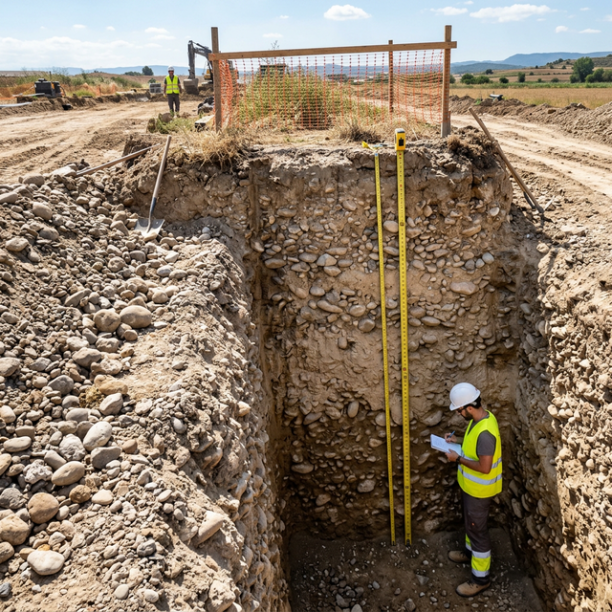
Compact gravels and sands
High-compacity granular deposits, typically associated with old fluvial terraces (Ebro, Duero, Tajo, Guadalquivir rivers) and Pleistocene glacis. They have no cohesion (they are not clays) but their a
View details -
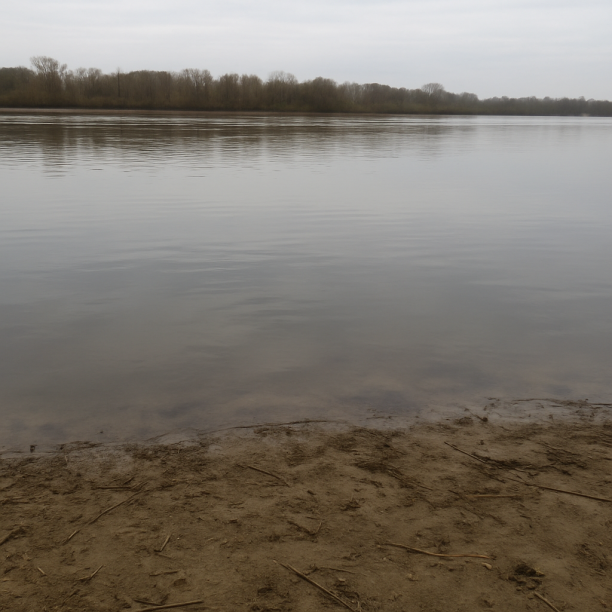
Water mass
Area corresponding to rivers, lakes, reservoirs, lagoons, permanent marshes or submerged coastal strips. The point consulted lies on a body of water identified cartographically by the IGME in its geol
View details
Do you need a geotechnical study in Sanchonuño?
Request a no-obligation quote. We’ll advise you on the type of study you need.
- Studies signed by a licensed geologist
- Compliant with the CTE and Eurocode 7
- Coverage throughout Spain


Más de 1000 estudios realizados
Request a free quote
We can contact you via WhatsApp, phone, or email, whichever you prefer.

