Geotechnical study in San Millán de Lara
Do you need a Geotechnical study?
Find the best price and service in San Millán de Lara. Get a free quote.
More than 1000 geotechnical studies carried out
Get personalized attention
We can contact you via WhatsApp, phone, or email, whichever you prefer.
Comprehensive Geotechnical Studies
We combine field analysis and laboratory testing to provide accurate technical reports and foundation solutions.


Expert professional
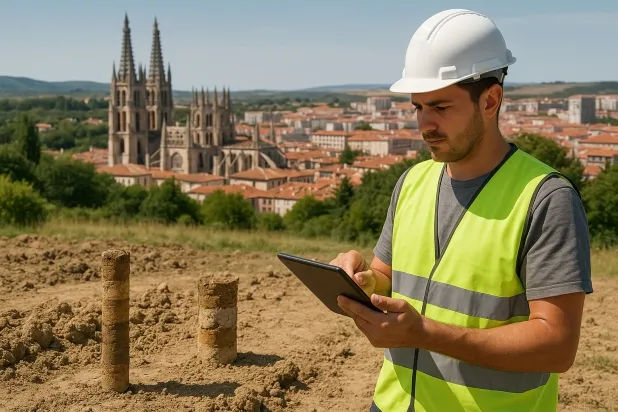
Technicians with more than 15 years of experience in the industry. We are specialists in access to difficult locations such as sites with level changes, basements, etc.
Accredited
Geotechnical calculations comply with the rules established by Eurocode 7, UNE-EN ISO 22476-4:2016.
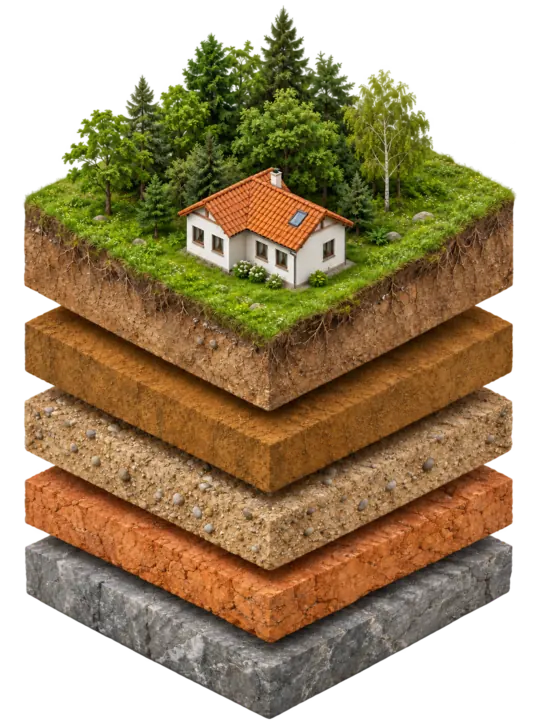
Explora el terreno bajo tu casa
Best price
Very competitive prices. The best prices for geotechnical studies in Spain. Request a quote and check it.
Speed and quality
Within 7 to 10 days you will receive a signed report from a geologist. It is mandatory in order to carry out new construction or refurbishment works that involve modifications to the structure.

Work areas
We provide Geotechnical study services throughout San Millán de Lara.
This includes the following geographical areas: Avila Province, Province of Burgos, Province of León, Province of Palencia, Province of Salamanca, Segovia Province, Province of Soria, Province of Valladolid, Zamora Province, Castilla y León and the surrounding areas.
We’ll come to your home in San Millán de Lara at a time that suits you, arranging a day and time.

Types of ground in San Millán de Lara
In San Millán de Lara, limestone, dolomite and marble predominate on the geological maps, with gravel and compact sand, phyllites and schists, and sandstone, conglomerate and flysch formations also present. Bearing capacity and foundation design will depend on the continuity and degree of alteration of the substratum, as well as on the possible heterogeneity of the deposits. The maps indicate formations that are generally impermeable or have very low permeability, although they may contain shallow aquifers; the geotechnical study must characterise the specific conditions of the site.
The records consulted include one seismic event in 30 years, with a maximum magnitude of 1,5, within the available reference area; this count alone does not allow structural design requirements to be inferred. The maps indicate the presence of karst, which must be checked before foundation work. Although the expansive-soil classification corresponds to a non-clayey substratum, this does not rule out expansiveness at a particular site, which must be checked by means of the geotechnical study. The mapped presence of gypsum, anhydrite and salts entails a possible risk of dissolution. Verification of karst and possible dissolution of saline materials are therefore relevant constraints, but the maps do not replace ground characterisation.
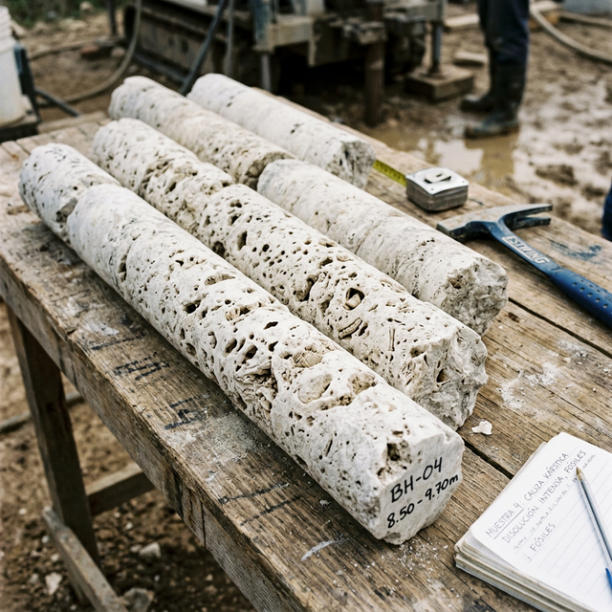
Limestones, Dolomites and Marbles
karstic structures (caves, sinkholes, dolines) that pose the main geotechnical risk.
View details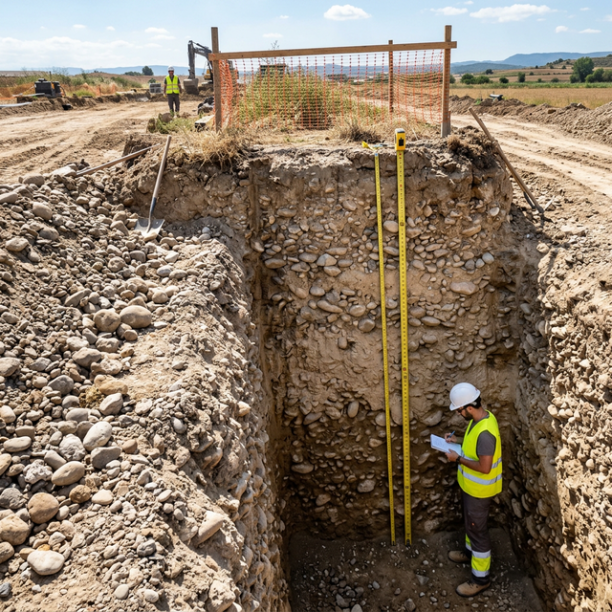
Compact gravels and sands
High-compacity granular deposits, typically associated with old fluvial terraces (Ebro, Duero, Tajo, Guadalquivir rivers) and Pleistocene glacis. They have no cohesion (they are not clays) but their a
View details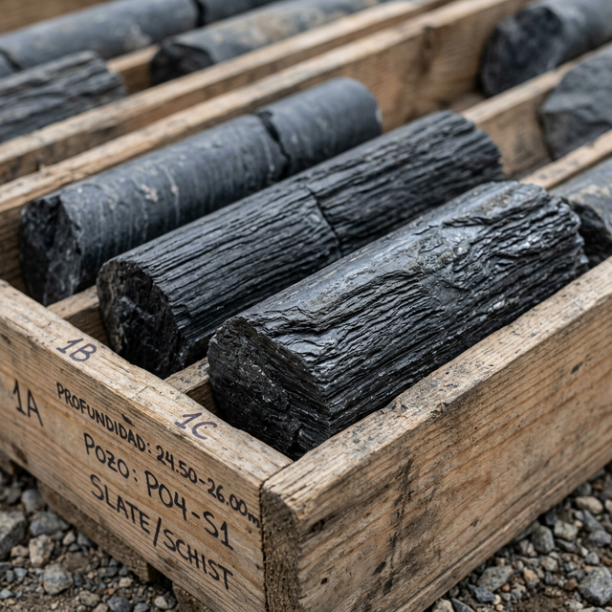
Phyllites and schists
Metamorphic rocks characterised by their foliation (parallel planes of weakness or slaty cleavage). Very common in Galicia, Asturias, the north of León, Extremadura and Sierra Morena. They are highly
View details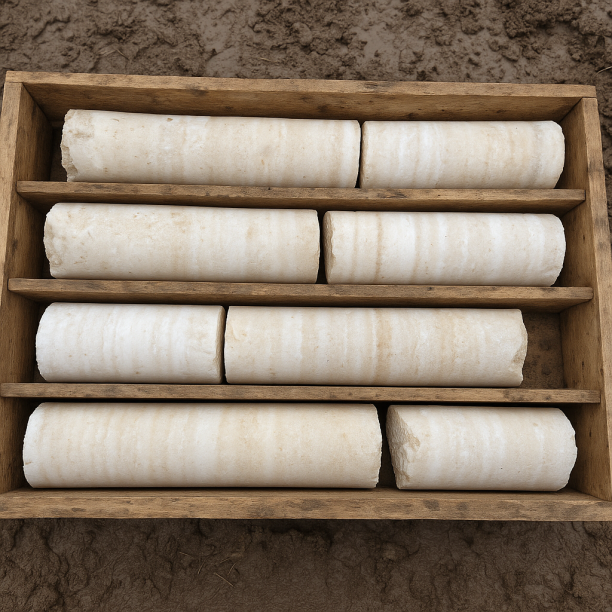
Gypsum, Anhydrite and Salts
Chemically formed sedimentary rocks produced by the precipitation of minerals dissolved in closed basins. Gypsum predominates (calcium sulphate) and, to a lesser extent, anhydrite and salts (halite).
View details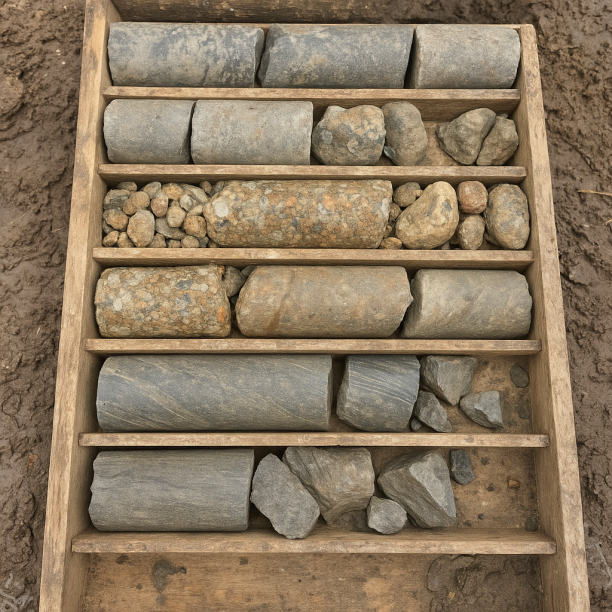
Sandstones, Conglomerates and Flysch
Sedimentary rocks formed by the cementation of fragments of other pre-existing rocks. They include sandstones (cemented sand), conglomerates (cemented gravels) and the rhythmic alternation of sandston
View detailsConstruction risks in San Millán de Lara
Approximate estimates. They do not replace the geotechnical study.
| Soil type | Expansivity | Settlements | Water table | Seismicity | Minimum foundation |
|---|---|---|---|---|---|
| Limestones, Dolomites and Marbles | None | Media | Media | Downward | In general, direct foundation using braced strip footing... |
| Compact gravels and sands | None | Downward | High | Downward | Conventional shallow foundation without problems. Raft f... |
| Phyllites and schists | None | Media | Media | Media | Shallow foundation if the stratum is competent. Strong b... |
| Gypsum, Anhydrite and Salts | Media | High | High | Media | The foundation must be designed to withstand local loss ... |
| Sandstones, Conglomerates and Flysch | None | Media | Media | Media | Direct foundation is feasible in most cases. For flysch ... |
Interactive geological map · San Millán de Lara
Mapping: IGME GEODE 50k · IGME MAGNA 50 · ICGC (Catalonia)
Geological Viewer
IGME · ICGC- Click on the map to see the geology at the point.
- Use the layer buttons to switch between geological views (GEODE, MAGNA, Lithology, Hydrogeology).
- Adjust the opacity of the geological layer with the control below.
- Press the full-screen button to expand the viewer.
Geological information
Typical stratigraphic profile
Indicative subsurface cross-section in San Millán de Lara · Based on GEODE soil types
Indicative profile based on GEODE soil types and typical CTE thicknesses
Seismic risk in San Millán de Lara
- 1 M 1.5 2007
How do we carry out your geotechnical study?
Step
Free quote
Request a quotation for your geotechnical study. Completely free and with no obligation.
Step
We arrange a day
We are looking for a day and time to carry out the field study.
Step
Conducting the geotechnical study
We’re going to move and carry out the study. In an hour or two we’ll have finished.
Step
Report submission
Within a week we will send you the signed documents of the geotechnical study by an accredited geologist.
Nearby locations
Geotechnical surveys near San Millán de Lara
Useful information about Geotechnical study
In-depth articles


Entities and institutions