Mont-roig del Camp turned the Roca into a sanctuary and its height into a guide for ships
Josep Nuet built the Peiró sanctuary for those who could not reach the Mare de Déu de la Roca. The terrain that made that climb difficult also meant that a chapel farther up could serve as a landmark for ships.
In 1757, Josep Nuet, a farmer from Mont-roig del Camp, built a sanctuary to address a specific difficulty: some people could not reach the summit where the Mare de Déu de la Roca stood. The new hermitage, dedicated to the Virgin of Peiró, was built along the road to Falset. The mountain imposed a constraint on access to worship, and this small building offered an alternative. The connection between the terrain and village life had a consequence that was both simple and decisive: people could visit a sanctuary without reaching the summit.
Height did not mean the same thing to everyone.
A rock rising above the plain
Mont-roig del Camp extends between the mountains and the Mediterranean, in the central part of Baix Camp. Its terrain combines the coastal plain with the elevations of the Catalan Pre-Coastal Range in the western part of the municipality. Streams and ravines descend from the mountainous area towards the sea. This contrast between higher and lower ground helps explain the sanctuary’s position: it does not occupy an undistinguished site, but a summit that stands out above the surrounding landscape.
The Mare de Déu de la Roca is located in the Serra de l’Areny, close to the village. Information published when it was declared a Cultural Asset of National Interest describes its setting as a place that commands the surrounding territory and is imbued with symbolic and representative values. The relationship between mountain and sanctuary is not based solely on its name. Its elevated position is part of its presence in the landscape and of the way people reach it.
Looking towards Mont-roig from the sanctuary, the town appears among fields and trees, with the plain stretching beyond the rooftops. The view makes it possible to understand the difference between being in the village and seeing it from an elevation. As when you look out from a balcony, changing your position alters how much you can take in; here, the terrain provides that balcony.
The reddish formations of Pla de l’Areny add another distinctive feature to the surroundings. A Diari Més article describes a landscape of red rock shaped millions of years ago and a route whose access is linked to the turn-off towards the hermitage. The rock and elevation are part of the landscape along the ascent, but it is the sanctuary’s position that explains the human consequences of this place.
The summit already had a sanctuary in the Middle Ages
The earliest known reference to the hermitage is not a description of its views, but a will. In 1230, Guillem de Tarragona made a bequest to the Mare de Déu de la Roca. The document places the sanctuary within the medieval life of the region. The mountain that would, centuries later, prove inaccessible to some worshippers was already associated with a religious institution.
The municipality had appeared in documents earlier. The deed of donation from Ramon Berenguer III to Bishop Oleguer, dated 23 January 1118, mentioned the boundaries of an area called Montem Rubeum. The 1230 reference to the hermitage therefore relates to a territory with an earlier documentary record. These are two distinct milestones: one identifies the place; the other attests to the existence of the elevated sanctuary.
For almost four centuries, from 1439 to 1835, the Mare de Déu de la Roca was under the protection of the monks of the Monastery of Sant Miquel d’Escornalbou. This institutional continuity also spanned episodes of destruction. The sanctuary was destroyed during the Peninsular War and rebuilt shortly afterwards. The building changed, but it once again occupied that mountainside site.
Characteristic soils in the area, ordered by relevance. High-compacity granular deposits, typically associated with old fluvial terraces (Ebro, Duero, Tajo, Guadalquivir rivers) and Pleistocene glacis. They have no cohesion (they are not clays) but their a Igneous and metamorphic rocks with very high mechanical strength. They form the most competent and stable substrate. They predominate in the Sistema Central, in Galicia, and in outcrops of the HercyniGround types in Mont-roig del Camp
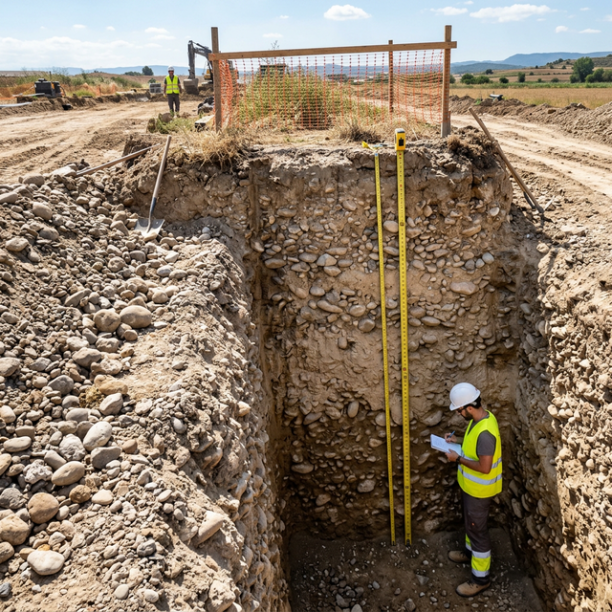
Compact gravels and sands
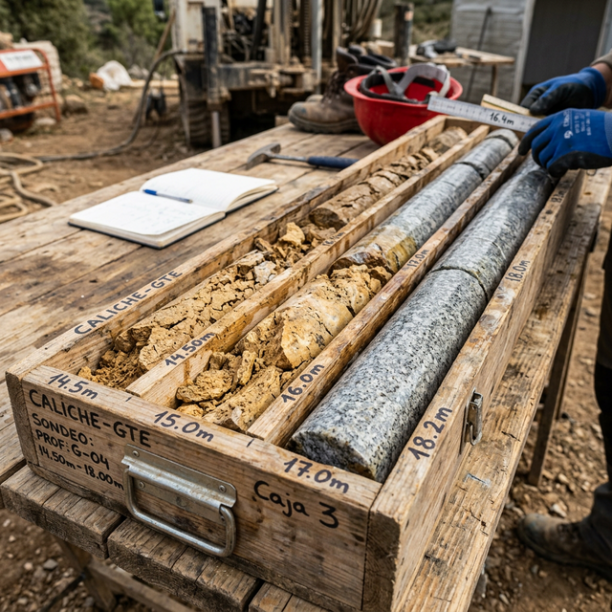
Granite, gneiss and igneous rocks
The Peiró brought worship closer to those unable to climb
A small hermitage could solve a problem the summit could not. Josep Nuet’s initiative did not move the Mare de Déu de la Roca or eliminate the climb: it created another place of worship for those who could not complete it. The Peiró sanctuary was established in 1757 for this specific purpose, as recorded in the municipal heritage description.
Here, the terrain acted as a barrier to access. There is no need to attribute specific gradients to it or reconstruct the effort required of each visitor to understand this: the documented purpose of the building was to serve those who could not make it to the top. The elevated position of the main sanctuary had a practical consequence, and a local resident responded by building another one along the road to Falset.
The Peiró is small and was completely restored in the early twentieth century. Its importance in this relationship between mountain and community does not depend on its grandeur. In contrast to the Roca’s commanding presence, it offered a nearby solution for those who needed another way to access worship. The two sanctuaries were linked by their different locations and by the need that prompted the new hermitage.
Higher up, a chapel looked out towards the sea
The height that made reaching the sanctuary difficult could also guide those far away. A little higher up from the Mare de Déu de la Roca stands the chapel of Sant Ramon, built in 1826 and restored in 1902. It is painted white to serve as a guide for ships. In this role, the chapel’s position on the mountain and the colour of the building serve complementary purposes: placing the landmark high up and making it recognisable.
The connection with the Mediterranean was therefore more than just a view from the sanctuary. The chapel served as a navigational aid for ships at sea. Like a sign placed on an elevated support, it made use of its location to become a landmark. There was no need to alter the mountain: the building made use of a feature the terrain already offered.
The designation of the Mare de Déu de la Roca as a Cultural Asset of National Interest included the definition of a protected area around it. The recognition applied to a monument located in a place with territorial, symbolic and archaeological value. The building and its position on the mountain range remain closely connected.
From the Roca, Mont-roig can be seen across the plain; from the sea, the white chapel was intended to serve as a guide. Between these two perspectives lies the Peiró, built for those who could not climb: a human response to the mountain’s height.
Do you need a geotechnical study in Mont-roig del Camp?
Request a no-obligation quote. We’ll advise you on the type of study you need.
- Studies signed by a licensed geologist
- Compliant with the CTE and Eurocode 7
- Coverage throughout Spain


Más de 1000 estudios realizados
Request a free quote
We can contact you via WhatsApp, phone, or email, whichever you prefer.